Data Models Driving Personalized Blackjack Rewards Across Mobile Platforms
Iris Berger · Jul 25, 2026

Data Models Driving Personalized Blackjack Rewards Across Mobile Platforms
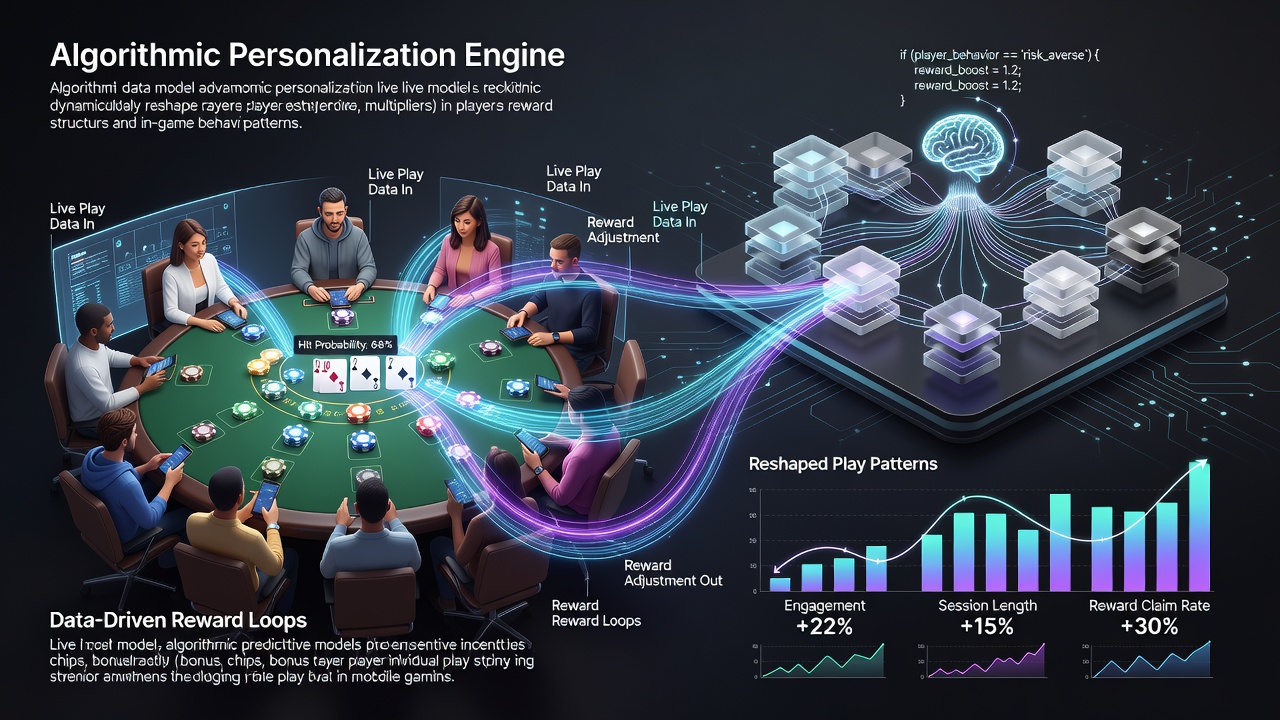
Algorithmic personalization in blackjack rewards relies on machine learning models that process player data in real time, and these systems adjust bonus structures, cashback rates, and promotional triggers based on observed betting patterns, session durations, and game variant preferences. Platforms collect metrics such as average bet size, frequency of side bets, and response times to dealer actions, then feed those inputs into predictive algorithms that forecast engagement levels and optimize reward delivery accordingly.
Core Components of Personalization Engines
Developers build these engines around supervised learning frameworks that classify players into segments according to historical performance data, while unsupervised clustering identifies emerging behavior groups that standard categories might miss. Reinforcement learning modules test incremental reward changes during live sessions, measuring how small adjustments to match bonuses or loyalty points affect continuation rates without disrupting house edge calculations. Data pipelines integrate inputs from mobile sensors, including device type, connection stability, and even touch pressure patterns on virtual cards, to refine personalization at the individual level.
Impact on Live Mobile Play Patterns
Players encounter tailored incentives that appear at moments when models predict hesitation, such as after a series of losses or during peak evening hours in specific time zones. These interventions shift session lengths, with aggregated data showing increased average play times when rewards align with individual risk tolerance profiles derived from prior weeks of activity. Live dealer interactions evolve as well, because algorithms route players toward tables featuring rule variations that match their historical win rates, creating feedback loops where participation reinforces the model's recommendations over successive sessions.
One documented case from aggregated platform reports illustrates how a mid-tier reward tier unlocked automatically after a player reached a calculated engagement threshold, prompting a switch from standard blackjack to a lower-variance variant that sustained participation through the remainder of the evening. Such mechanisms operate continuously, updating parameters every few minutes as new data streams arrive from thousands of concurrent mobile connections.
Regulatory Context and Data Practices in July 2026
By July 2026 several jurisdictions had updated their oversight frameworks to require transparency reports on algorithmic decision-making in gaming rewards, and operators responded by publishing summaries of model inputs while withholding proprietary weighting details. These disclosures revealed that personalization engines routinely incorporate geographic and demographic variables alongside behavioral signals, yet platforms maintain strict separation between reward calculations and any identity-linked financial records to comply with privacy statutes. Industry groups such as the American Gaming Association have compiled comparative studies across North American markets, documenting how data model sophistication correlates with higher retention metrics in regulated mobile environments.
European operators follow parallel standards under frameworks overseen by the Malta Gaming Authority, where audits examine whether personalization creates unintended disparities in reward access across player cohorts. Reports from these reviews indicate that models trained on diverse regional datasets reduce variance in bonus distribution compared with earlier rule-based systems that applied uniform thresholds.
Technical Integration with Live Dealer Systems
Live mobile blackjack platforms synchronize personalization layers directly with streaming video feeds and random number generators, allowing reward triggers to activate between hands without interrupting dealer pacing. Backend systems monitor latency and adjust notification timing so that personalized offers reach the player interface during natural pauses, such as while cards are being shuffled or bets are being settled. This synchronization extends to tournament formats, where algorithms allocate entry incentives based on projected completion probabilities calculated from each participant's mobile usage history and prior tournament results.
Research from academic institutions including the University of New South Wales gaming analytics programs has examined how these integrations influence decision speed, finding measurable shifts in bet sizing when players receive segmented promotions calibrated to their established patterns. The studies track thousands of sessions across multiple device types, confirming that model-driven adjustments occur consistently within regulatory boundaries established for fair play verification.
Future Trajectory of Model Refinement
Engineers continue to incorporate additional data streams, including voice interaction logs from live chat features and aggregated sentiment indicators derived from in-app feedback, to further calibrate reward personalization. These expansions aim to maintain engagement across longer time horizons while preserving the mathematical integrity of blackjack variants offered on mobile networks. Observers tracking industry deployments note that cross-platform data sharing agreements between operators have accelerated model training cycles, enabling faster adaptation to seasonal fluctuations in player volume without requiring manual rule updates.
Conclusion
Algorithmic personalization continues to evolve through iterative improvements in data modeling techniques, reshaping how rewards integrate with live mobile blackjack sessions across regulated markets. The systems rely on continuous input processing and segmented output delivery, supported by oversight mechanisms that balance operational efficiency with compliance requirements established through July 2026. As platforms refine these approaches, the underlying data structures determine the specific pathways players encounter during extended play periods on mobile devices.