Shifting Bonus Thresholds: How Wagering Milestones Influence Strategic Play in Regulated Digital Blackjack
Wendy Lehmann · Aug 17, 2026
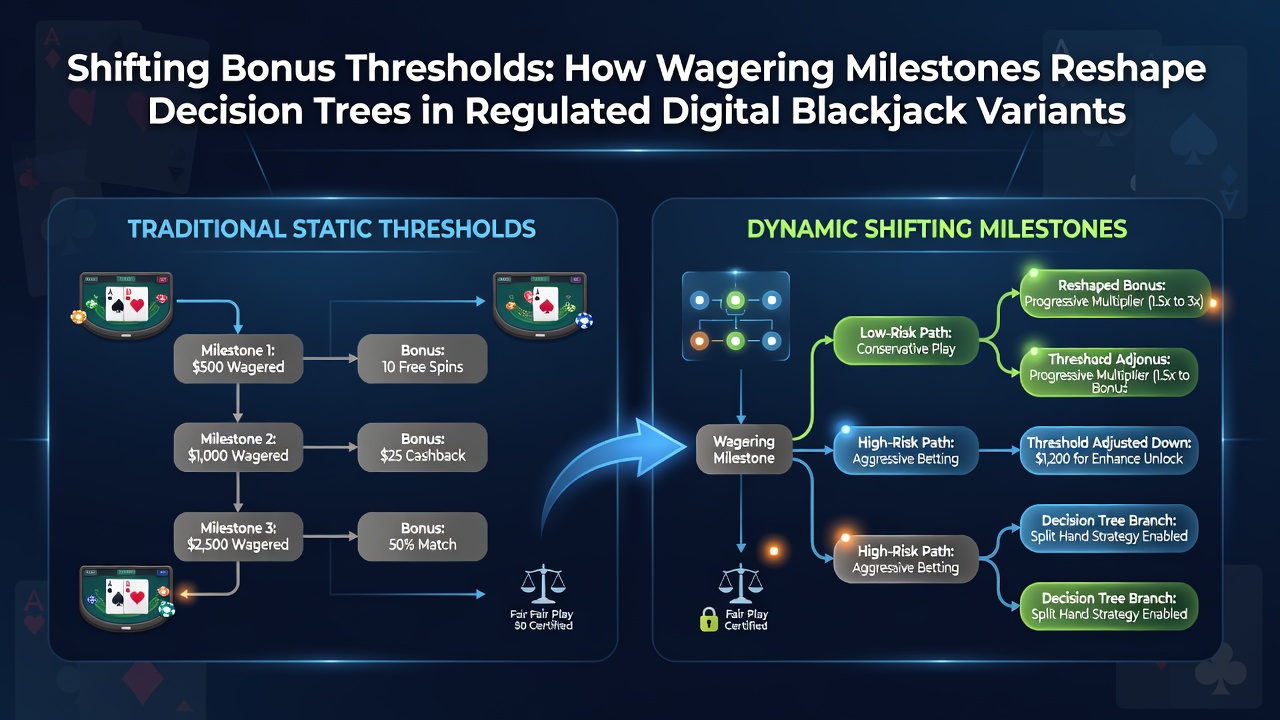
Shifting Bonus Thresholds: How Wagering Milestones Influence Strategic Play in Regulated Digital Blackjack
Regulated digital blackjack platforms adjust bonus thresholds regularly, and these changes directly modify the mathematical value assigned to each player decision during a hand. Wagering milestones function as progressive targets that reward continued play once certain volumes are reached, yet they also create temporary windows where optimal basic strategy deviates from standard charts. Observers note that players who track these thresholds often recalibrate hit-or-stand choices when remaining requirements drop below a specific multiple of the current bet size.
How Threshold Adjustments Alter Core Decision Trees
Blackjack decision trees expand when bonus terms introduce variable multipliers tied to total wagers. A standard chart recommends standing on 16 against a dealer 10, but once a player nears a milestone that unlocks additional free rounds, the expected value of hitting rises because the potential bonus payout outweighs the immediate risk. Researchers from academic gaming studies have documented these shifts through simulation models that layer bonus conditions onto probability matrices. Data indicates that thresholds set at 20x, 30x, or 40x produce distinct inflection points where the recommended action flips for marginal hands.
Platforms operating under multiple jurisdictions must synchronize these adjustments with local compliance rules. In August 2026 several operators updated their milestone structures following guidance from the Alcohol and Gaming Commission of Ontario, which required clearer disclosure of how progressive requirements interact with game rules. Those updates prompted immediate revisions to in-app strategy tools that now display conditional recommendations based on current progress toward the next threshold.
Regulatory Frameworks Shaping Threshold Mechanics
European markets provide additional context through reporting requirements that track how bonus parameters affect player behavior. Figures from the Malta Gaming Authority reveal that platforms publishing threshold transparency reports saw a measurable change in session length once players could visualize remaining wagering needs. The same reports show that variants offering lower house edges during milestone periods attract higher engagement without violating return-to-player mandates.
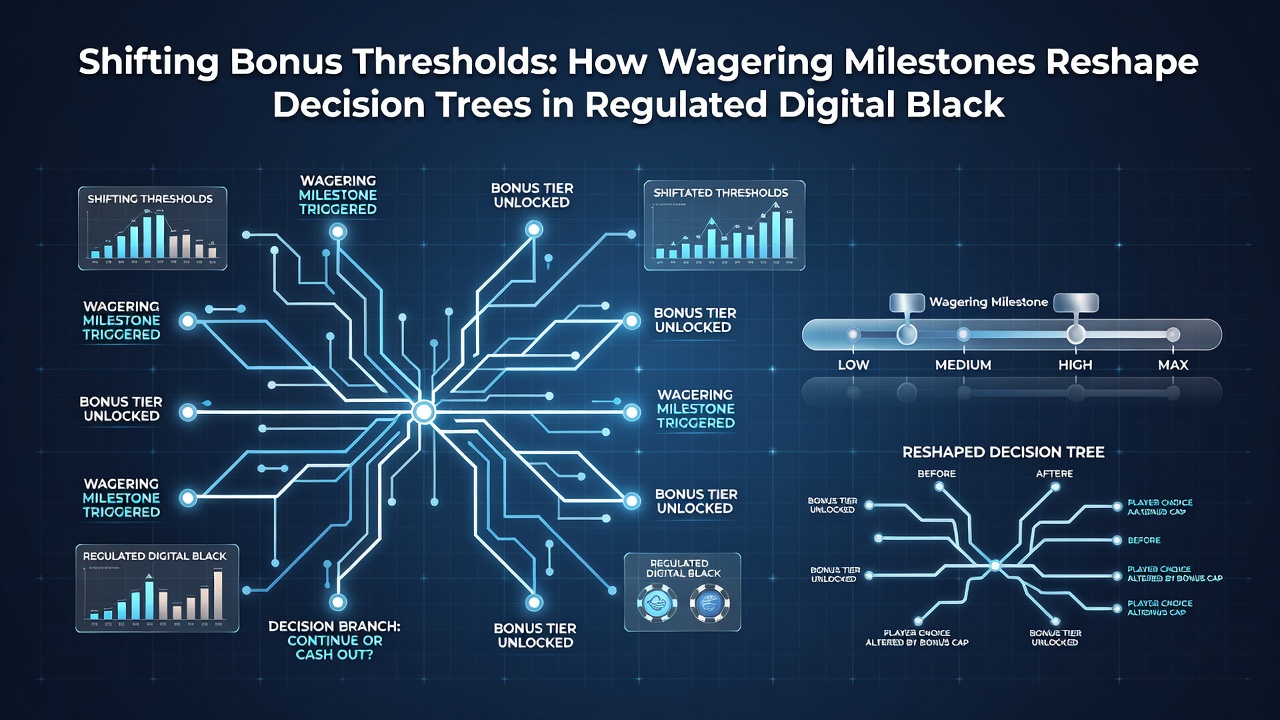
North American operators face parallel pressures. The Nevada Gaming Control Board publishes aggregated data on bonus utilization that demonstrates how threshold resets coincide with seasonal traffic spikes. Analysts reviewing this data observe that players who reach 75 percent of a milestone frequently increase bet sizes on low-volatility hands, a pattern that emerges consistently across regulated mobile applications.
Practical Examples from Platform Implementations
One documented case involved a regulated site that lowered its primary threshold from 35x to 25x midway through a promotional cycle. Players who had already cleared 20x suddenly faced different risk-reward calculations on pairs and soft totals. Internal performance logs indicated a spike in double-down frequency for hands valued between 9 and 11 once the revised milestone became reachable within two additional rounds.
Another example appears in multi-state deployments where thresholds must align with varying tax structures. Platforms serving both Nevada and New Jersey markets maintain separate decision overlays so that the same hand receives different advice depending on which bonus pool the player has activated. These overlays update automatically when regulatory filings require threshold recalibration.
Data Patterns Across Jurisdictions
Studies compiled by university research groups specializing in decision science under uncertainty show that threshold proximity correlates with measurable changes in average decision time. Hands played when 10 percent or less of a milestone remains tend to resolve faster because players have already internalized the adjusted parameters. Conversely, early-session hands exhibit longer deliberation as participants evaluate whether current progress justifies deviation from baseline strategy.
Industry reports further indicate that recurring threshold resets every 30 days encourage consistent return visits, yet they also require operators to refresh educational materials that explain the interaction between milestones and game mathematics. Clear communication of these interactions helps maintain compliance while preserving the integrity of regulated play.
Conclusion
Shifting bonus thresholds continue to reshape decision frameworks in regulated digital blackjack as operators respond to evolving compliance standards and player tracking capabilities. The resulting adjustments create dynamic environments where standard strategy charts serve only as starting points rather than fixed references. Ongoing data collection from regulatory bodies and academic simulations provides the factual foundation for understanding how these mechanisms operate across different markets and time periods.