Tournament Architectures and Blackjack Reward Programs: Insights from Aggregated Performance Data
Iris Berger · Jun 13, 2026
Tournament Architectures and Blackjack Reward Programs: Insights from Aggregated Performance Data
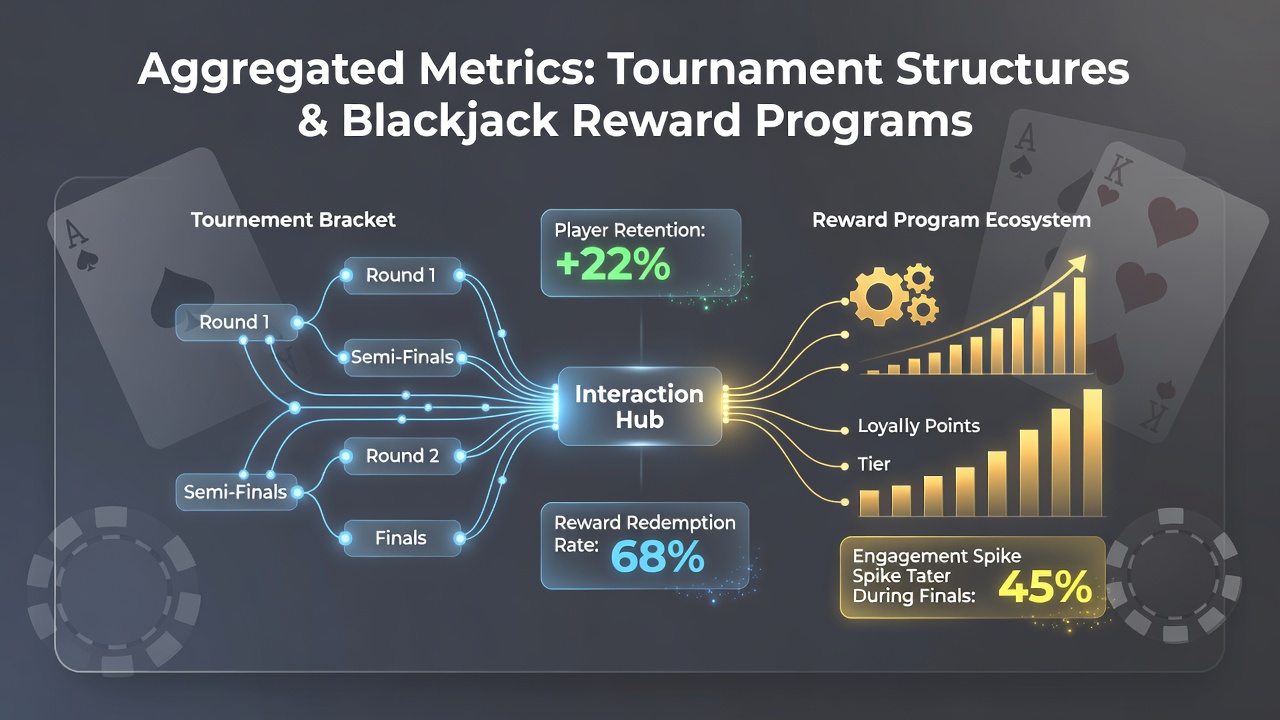
Data from multiple platforms indicates that tournament formats directly influence how players accumulate and redeem rewards in ongoing blackjack programs, with entry structures often determining point multipliers and tier progression speeds. Aggregated metrics across various sites reveal that single-elimination brackets tend to accelerate short-term reward spikes while round-robin formats sustain longer engagement cycles that align with cumulative loyalty thresholds. Observers note several consistent patterns when examining these interactions. Players entering weekly sit-and-go tournaments frequently see their base loyalty points doubled during the event window, yet those same participants show reduced activity in standard cash games immediately afterward according to platform telemetry. This shift occurs because tournament buy-ins often convert into reward credits that carry over into the next loyalty cycle, creating a bridge between competitive play and regular sessions.Structural Elements Driving Reward Integration
Tournament organizers design payout schedules that frequently incorporate loyalty point bonuses scaled to finishing positions, and these additions stack with existing reward program multipliers during promotional periods. Metrics compiled through June 2026 demonstrate that mid-tier events with 50 to 200 participants produce the highest conversion rates from tournament earnings into ongoing program redemptions compared to larger field competitions.
Platform data further shows that satellite qualifiers feeding into main events generate secondary reward pathways, where smaller buy-in wins translate into entry credits that also count toward monthly loyalty targets. This layered system encourages players to maintain consistent participation across both tournament and non-tournament offerings rather than focusing on one mode exclusively.Regional Variations in Metric Collection
Regulatory environments shape how these interactions appear in aggregated statistics. Platforms operating under New Jersey Division of Gaming Enforcement oversight report tournament reward redemptions separately from standard play, allowing clearer tracking of how event structures modify overall loyalty behavior. In contrast, Canadian provincial operators bundle these figures together, which masks some of the finer correlations until researchers apply additional filtering methods.
Australian data sources highlight another dimension where state-based reward caps interact with tournament prize pools, leading to adjusted point values once players reach certain thresholds. These adjustments appear most pronounced during summer festival seasons when multiple overlapping events run simultaneously.
Player Behavior Patterns Across Event Types
Those analyzing session logs observe that players who treat tournaments as primary activities often maintain higher overall reward balances because event finishes provide burst rewards that offset slower accumulation during regular play. Conversely, participants who view tournaments as occasional additions show steadier but lower total point growth since they rarely trigger the bonus multipliers tied to competitive formats.
Multi-table tournament structures create distinct effects compared to heads-up formats, with the former distributing smaller point awards across more participants while the latter concentrates larger bonuses on fewer winners. Aggregated figures indicate this distribution pattern influences how quickly players advance through loyalty tiers, particularly when reward programs reset on monthly or quarterly schedules.Technical Synchronization Between Systems
Backend integrations between tournament software and loyalty databases have evolved to handle real-time point transfers, and these updates became more widespread following platform revisions completed before June 2026. The synchronization allows finishing positions to immediately reflect in player accounts as redeemable credits rather than pending adjustments that previously delayed access by several days.
This technical alignment reduces friction for users who move between competitive and standard play within the same session, yet it also generates more granular data sets that researchers use to identify correlations between specific tournament rules and subsequent reward redemption choices.Conclusion
Current metrics establish clear connections between tournament design choices and the functioning of ongoing blackjack reward programs across different jurisdictions and platform types. These interactions continue to shape how point systems evolve as operators refine their offerings based on observed player movement patterns. Further analysis of data collected after June 2026 should provide additional clarity on whether these relationships remain stable or shift with new event formats and reward adjustments.